The Mandela Effect
What you Thought Was True, Isn’t?

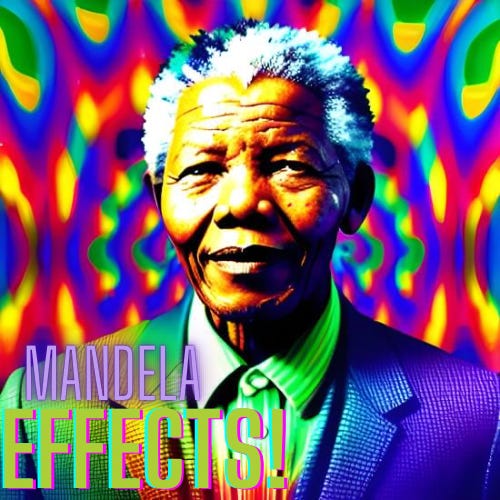
Forgive me if this is “old news” to some, but recently I came across a YouTube video about a running Internet meme called the “Mandela Effect” and it has literally blown my mind. I have spent about of week of my time investigating this topic simply so I can once again, sleep in peace.
For those that are like myself and haven’t heard about this, here is a brief summary of what the Mandela Effect is.
The Mandela effect is a phenomenon where a group of people remember an event or detail differently from its actual occurrence. This term was coined by Fiona Broome in 2009, who believed that Nelson Mandela had died in prison in the 1980s, but was surprised to learn that he had been released in 1990 and served as the president of South Africa from 1994 to 1999.
Since her postulation over a decade ago, the Internet has done a fine job of digging up many other examples of the Mandela Effect. Here are the top 3 that have blown my mind, and have made me question which universe I might be living in!
The Movie “Shazaam” with Sinbad Did Not Exist?
One such example that I am having a hard time grasping, is my clear recollection of a 1990s movie starring Comedian Sinbad called “Shazaam”.
I clearly remember watching this movie! And yes, there was a very similar but different movie a couple of years later starring NBA legend Shaquille O’Neal, called “Kazaam.” I also remember purposefully not watching that movie because it was such a clear knock-off (and by that time I was a senior in high school and thought it was dumb anyway).
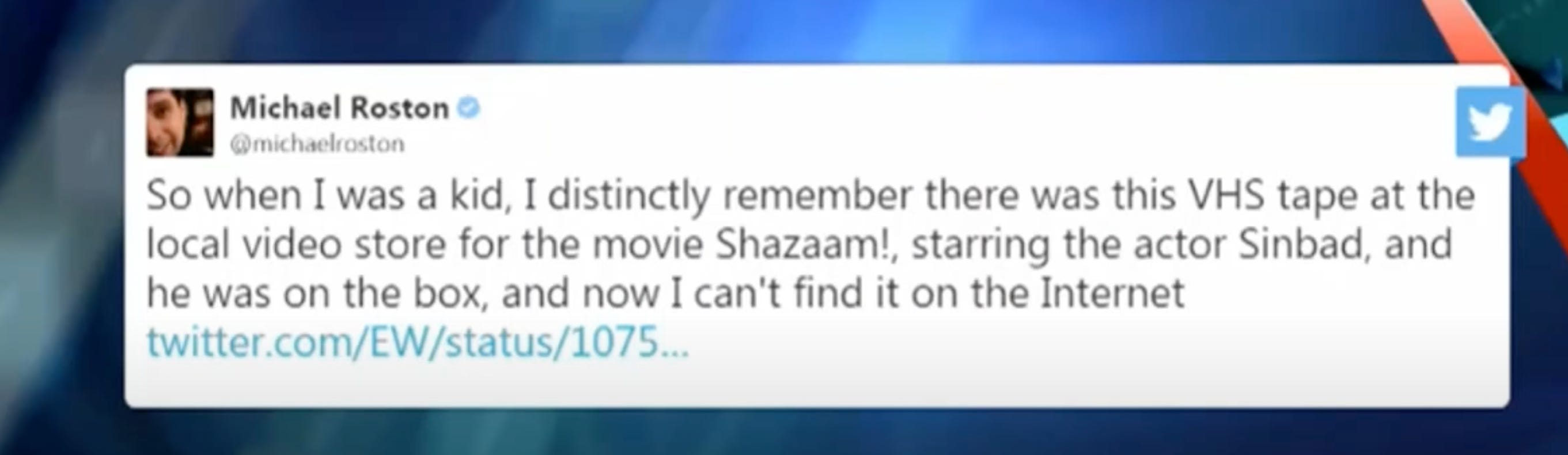
But, even Sinbad himself has gaslit a very large group of us 80s/90s kids by stating that he never made a movie called Shazaam! He even collaborated with College Humor to create this pithy satire that pokes fun at other commonly shared “misremembered facts.”
It’s been labeled as a Internet-related hoax. But how can this possibly be, when the Internet wasn’t even a thing when Shazaam was made and distributed? Come on people. Even the actors staring in the REAL movie Shazam recall it!
It’s the Berenstain Bears?

Another example is the popular children’s book series “Berenstain Bears.”
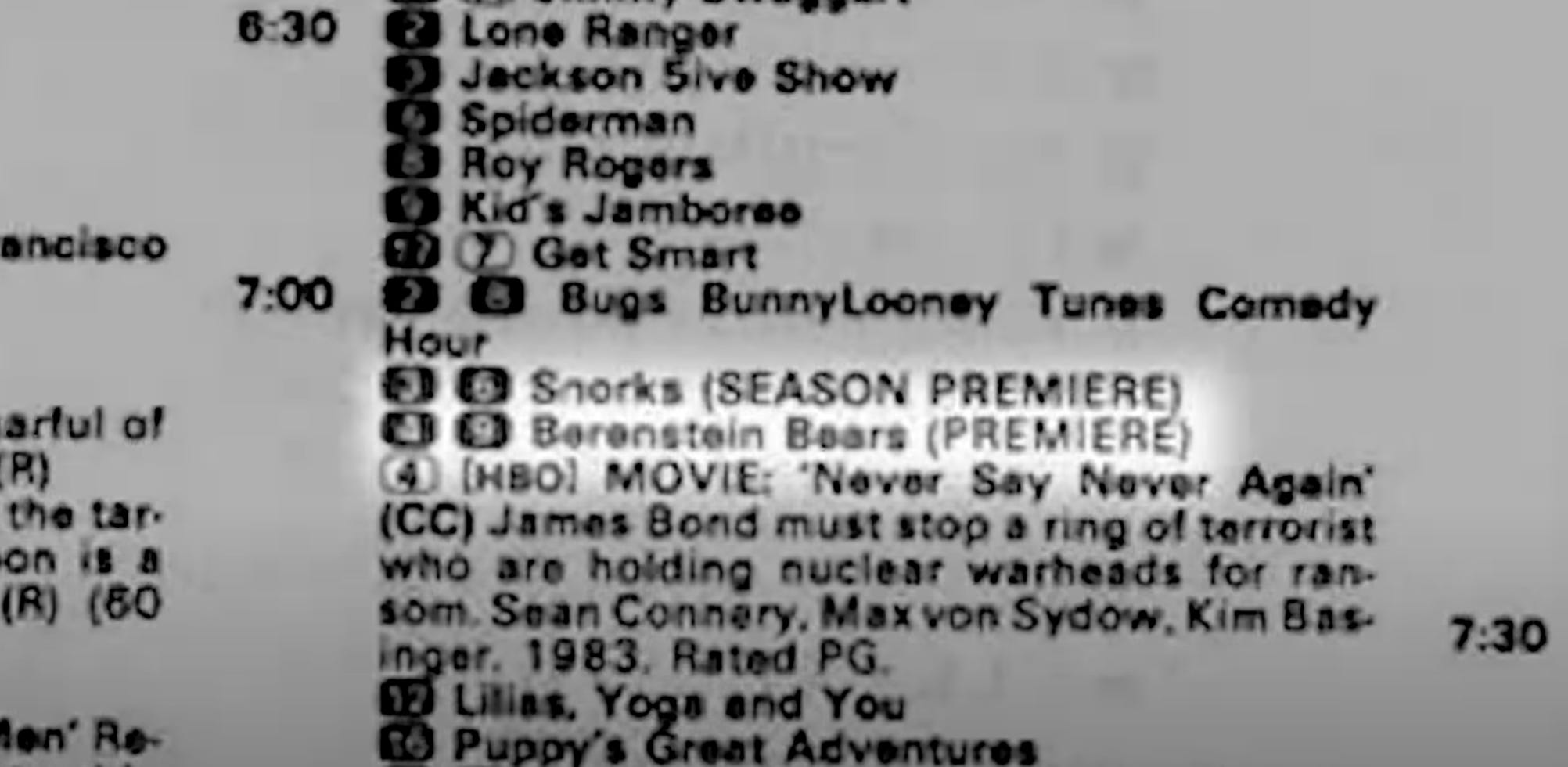
I read these books (and also watched the TV series) and never recall it ever being spelled with “stain” at the end. Apparently I am part of a large cohort that recalls it differently, as I always believed it to be spelled “BerenSTEIN” Bears. But if you look at the books and even listen to the opening theme song - clearly they are both “Berenstain Bears”. Perhaps the confusion is because it was often misspelled in TV Guide listings back in the day?
I wish I could say learning this ruined my childhood, but honestly the books were never really all that great to me and neither was the cartoon series. I will take Gummi Bears over Berenstain Bears any day (and yeah, it’s spelled “Gummi” not “Gummy”).
She Never Said “Mirror, Mirror, On the Wall …”
Apparently the Queen in the Classic Disney Movie Snow White, never said “Mirror, Mirror, on the wall, who is the fairest one of all…”
Instead, she said this:
“Magic Mirror, on the wall, who is the fairest one of all…”
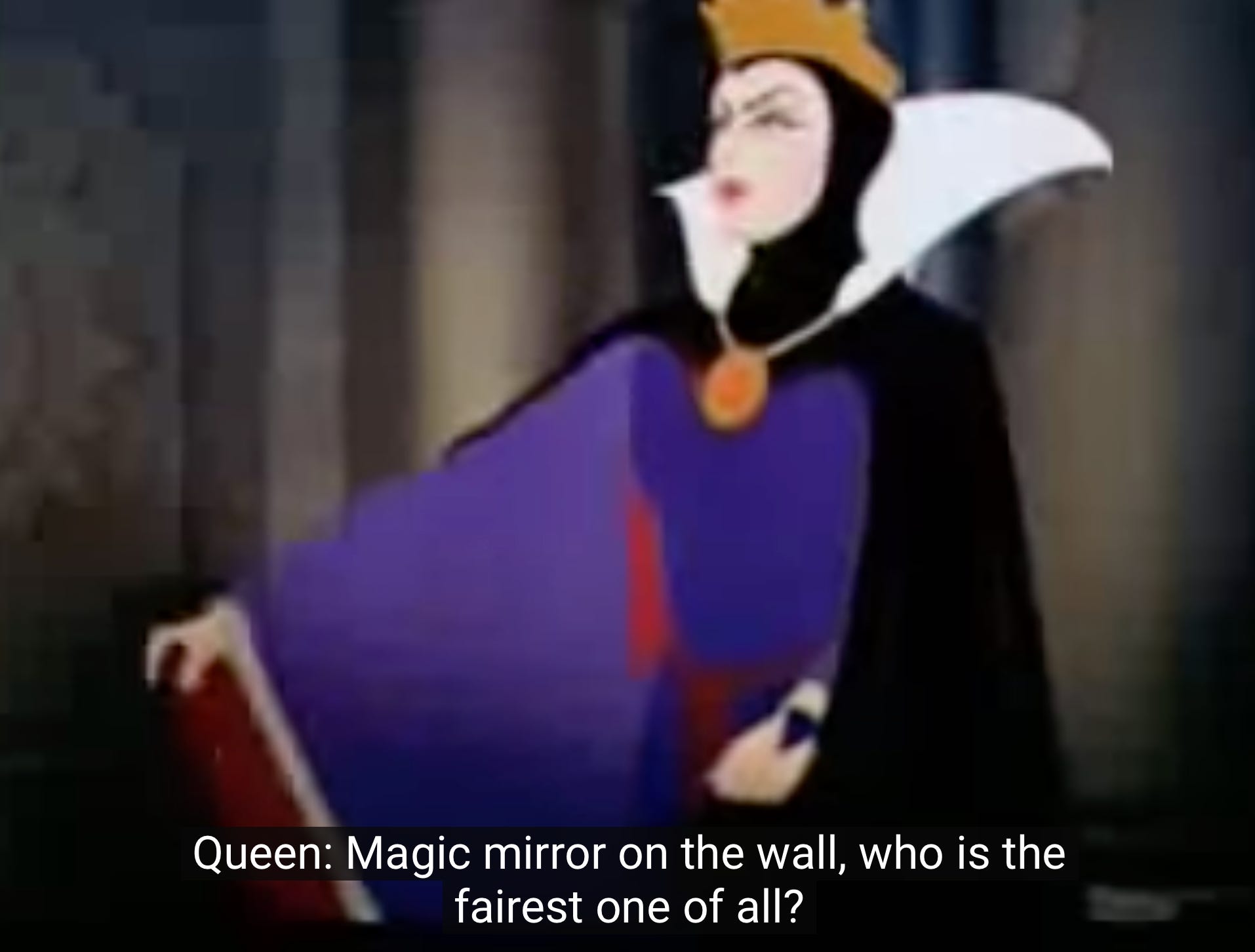
Which do you remember?
What’s Really Going On?
Mandela Effects have led many to present some interesting hypotheses to help explain why many of us recall certain people, products, characters, and events a certain way.
Psychologists and neuroscientists have weighed in on this and have offered several cognitive-based explanations.
I think in the instance of the Berenstain Bears example, many of us simply have fallen victim to a mass form of what is called confabulation. This is when the human brain, out of efficiency and a sense of resolution, will fill in the gaps for things that simply don’t make sense or are missing.
In this case, the sound from the spelling of “Stein” phonetically sounds more logical to many of us than “Stain”. Also, as children, if we discussed the books with our parents, teachers, and peers, and we referred to the characters as “Berenstein Bears” without any correction, this would have created a situation of confirmation bias and semantic priming.
With Shazaam, I am having a difficult time reconciling my firm belief that this movie did exist. It could (I suppose) be an instance of “false memories” due to the fact that Sinbad did dress up a lot in those purple silk vests and wore the parachute pants that were all the rage in the 90s (thanks to MC-Hammer).
But if so many of us clearly recall this movie, then how could so many of us share the same false memory? This isn’t just some Internet hoax in my opinion - this movie was available on a VHS tape, and yet, does anyone out there have one? And why does Sinbad say we are all just simply crazy and were born from drugged out parents or something? I am not sure what is worse - being told that this was never real, or Sinbad being such a jerk about it!
My Theory
Science is useful in helping us explain and rationalize human behaviors through the understanding of how the human brain functions.
Ninety-percent of my logical/rational brain tells me this is like a “Yanny/Laurel” phenomenon where large segments of a population can receive and interpret inputs completely different ways (in this case, nearly 50-50) - and this warps our perception of reality to the point past reconciliation.
However, I do also believe that we as humans function independently within a “Grand Brain” which also has it’s own connections, links, and neurons that help us navigate through dimensions of space and time. How we perceive inputs is just as much a function of our brain as it is how we, ourselves, perceive our own position within the construct of reality.
One of my favorite hypotheses out there that syncs up nicely within this perspective is that we aren’t suffering from false memories, priming, confabulation, or any combination of some sort of mass psychosis. Instead, there is the possibility that some of us are simply living in a slightly different universe than others.
That is to say, the Mandela Effect confirms the existence of the Many Worlds/Parallel Universe interpretation of quantum mechanics.
In this interpretation of quantum mechanics, if infinite parallel universes exist, then it is possible, for example that there is a state of existence where Mandela died in the 1980s while in prison and also lived into his mid-90s as a former President of South Africa.
To illustrate how this could possibly work, imagine that time exists on the x axis, and space on the y axis. “Mandela Effects” occur when two or more individuals reality frequencies cross and create a “ripple” in space time. This creates a slight harmonic shift in the realities for both individuals, where one may experience a slightly different version of reality than another. The more crossing of frequencies, the greater the variance in realities.
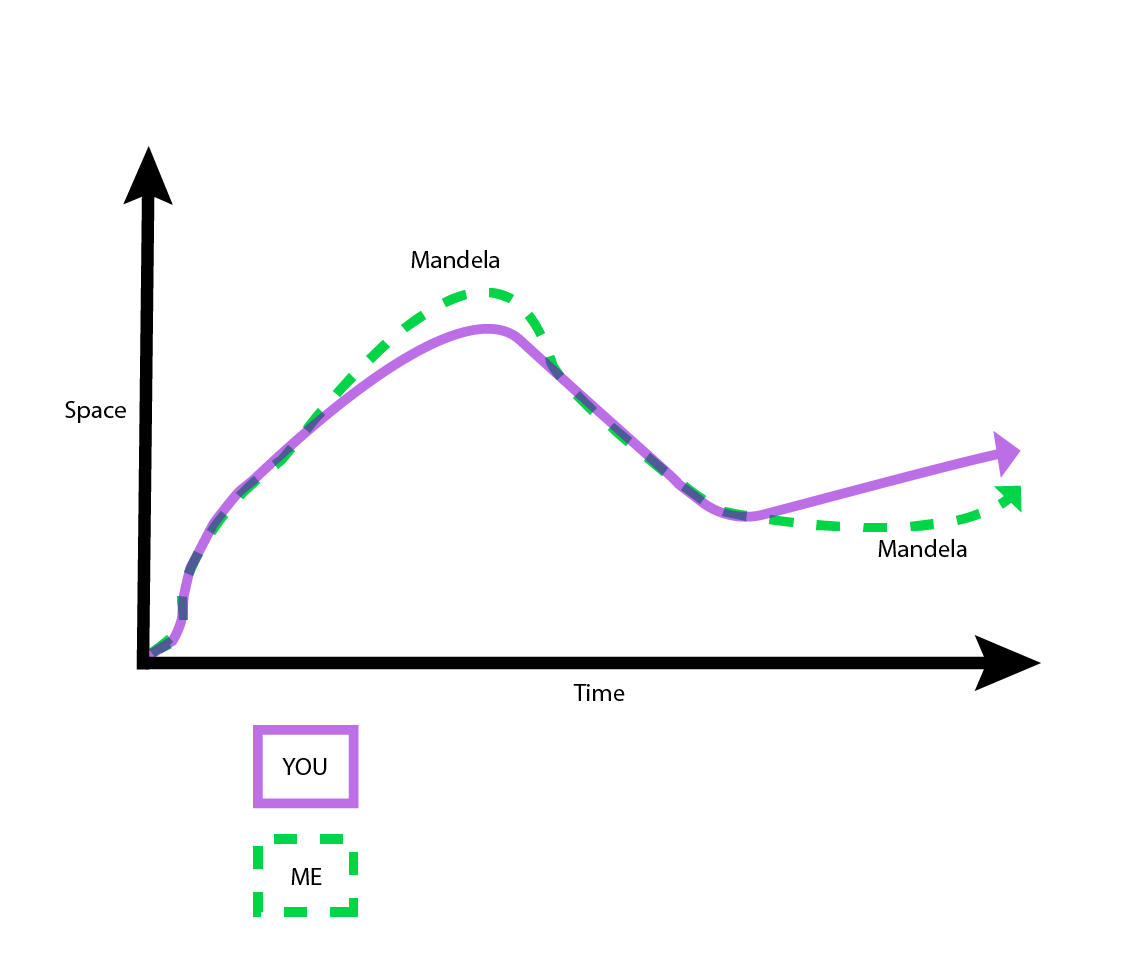
In quantum mechanics, it has been shown empirically, that an individual can change the outcome of movements throughout space-time, simply by being present. In lab experiments testing this, scientist “A” and scientist “B” can observe an entirely different outcome at the same time. This is called “Quantum Superposition.”
To make things even stranger, particles traveling along one path can instantaneously effect the behavior of particles on another path - without even being close to one another. They could be millions of light years apart, or touching. This is called “Quantum Entanglement.”
In simplistic terms, what this says is that while we all exist on the same time plane of existence, we, as individuals, can travel across time in our own unique “wave lengths.” In essence, just by existing - and participating - in time, we are creating and living within our own individual Universes!
Famed Physicist Albert Einstein called this phenomena “Spooky action at a distance” and he went to his grave being unable to reconcile it in his own mind - and doubted it was really “real.” But over the last 100 years, quantum entanglement has become very much a possibility, and has been confirmed in many independent experiments, including one by a team of scientists at the National Institute for Science and Industry in 2015.
When you think about this concept carefully, it explains a lot. Take the feeling/perception of déjà vu.
We have all probably experienced this at least once in our life - the profound feeling that we have said something before, had a conversation before, or experienced an event before. I have had many such instances in my life - some so strong that I have been able to correct past actions and change the outcome.
Because I have experienced this personally, this has strengthened my belief that reality isn’t static. It is like a fabric (like a Magic Carpet!) that ripples and distorts, and all of us ride it at different frequencies. Sometimes our frequencies are in sync, but other times, there might be a disruption in the “harmonics” of those frequencies. Each time a disruption happens, that is when something strange happens such as deja vu or the Mandela Effect. It’s not something spooky, random, or “woo-woo” - it’s just a result of how space and time interact with our own construct of reality.
So what do you think after learning about this? Is this just some Internet meme gone wild or do you think there’s something going on that we need to explore more (as a species that is).